Why I’m an Optimist
I was born one, but there's a logic to choosing to remain one.

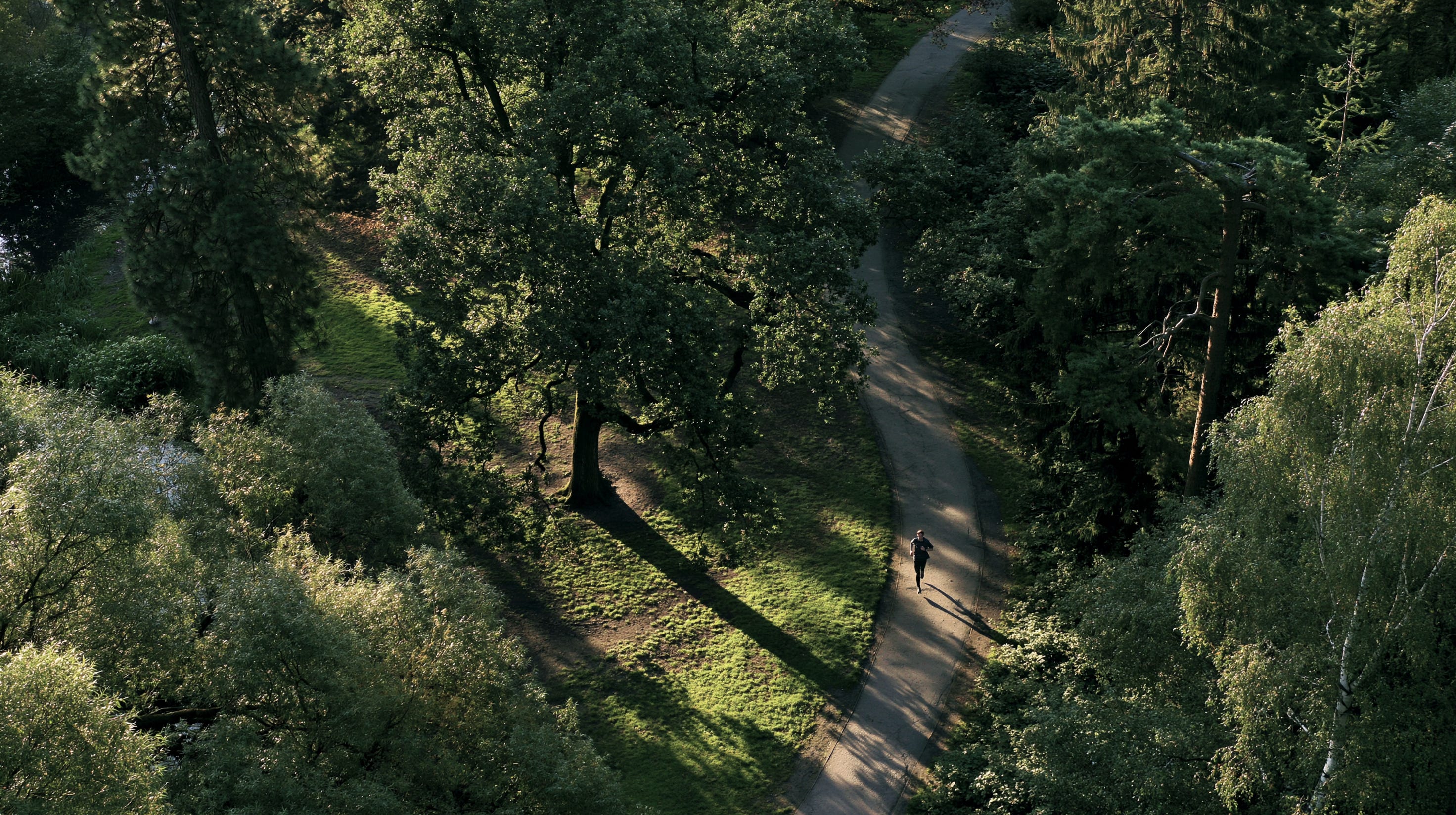
As far as I can tell I was born an optimist. This makes me feel quite lucky. I’ve been optimistic about the things in my life, and about life in general, for as long as I can remember.
Of course, there are also times when I’ve felt down, depressed, and frustrated. Being an entrepreneur, for instance, can be both incredibly lonely and incredibly frustrating. It’s very difficult finding the right idea to work on. I have ideas all the time, and those ideas often seem like good ideas in the moment. But once I sit down and seriously consider pursuing them, once I actually do some homework, 99% of the time I find out that the idea is impossible for this or that reason. Very often, I find that the idea is already taken, often by a very well-funded company.
It often feels as if all the low-hanging fruit have already been picked: the good ideas are already taken and there are no good ideas left. Of course, in reality, this couldn’t be further from the truth. There are probably more opportunities, more promising ideas, today than ever before in the history of humanity.
I may have been born an optimist, but I choose to remain one every single day. That’s not a given, because of the state of the world. Turn on the news, or social media, for five minutes and it’s pretty easy to feel pessimistic. It all feels a bit overwhelming.
There are good reasons I choose to be optimistic. I’ve never tried to articulate them before, but I want to try now.
Secrets
One reason I’m optimistic is that I believe the world is full of secrets. That may sound like something only children believe, but I genuinely know it to be true. Why?
First and most obviously, because I’ve discovered some of those secrets myself. Not a ton, but enough to see the impact they have. Here’s one: show up always, be energetic and curious and good-natured, and incredible things will happen to you. Here’s another: confidence and preparation together open just about every door. Here’s another: poor people are as happy as, or happier than, wealthy people. Here’s another: unless you’re an athlete in training, you can safely ignore the feeling of hunger.
Here’s the biggest secret of all: raising a child is the single most joyful, meaningful, valuable thing you can do in the world.
In some sense those things may sound obvious, but they’re the sort of secrets that you need to discover and experience for yourself in order to understand, appreciate, and benefit from. It took me many years to fully comprehend and to understand how to use each of these secrets effectively. And it often took the perfect alignment of circumstances just to realize them: very often the combination of an influential person or a group of people, a particular place, and a particular chapter of my own life.
If I’ve been fortunate enough to discover some of these secrets, it inevitably makes me wonder: how many secrets are out there that I haven’t yet discovered? Each of the secrets I’ve already discovered has made my life better in material ways. Sometimes really massive, remarkable ways.
It might seem like, yes, every inch of the map has been explored—and every idea has already been thought of. But in reality it’s never that simple. There are tons of secrets still out there, waiting to be discovered. Some are secrets that almost nobody knows. Some are secrets known by thousands, or even millions of people, but that doesn’t make them less valuable. And there are certainly many things that no one knows the answer to, and that you could plausibly answer, although it would take a lot of work.
Here are some random examples: Why do we sleep? (We know it’s essential, but we don’t know why.) How does general anesthesia work? (We’ve been using it for 180 years. We have no mechanistic explanation for how it produces unconsciousness. It just... does.) What led to the Bronze Age Collapse? (~1200 BC). Who built Göbekli Tepe and why? How does the placebo effect mechanism work? When and how did language emerge? What is dark matter, really?
I don’t know about you, but I’m a curious person and these are the sort of fascinating questions that could occupy me for a long time. Finding the answers would not only be deeply interesting, it would also be a huge unlock for humanity. It would create enormous value for lots of people, and potentially even unlock entirely new fields and new scientific or medical interventions. And we have new tools at our disposal that might help answer them.
There are so many categories of secrets. Those that can improve one life. Those that can improve many lives. Those that power companies and big institutions (each of the good, lasting ones has a core secret). It’s a long list. Even pondering this meta truth makes me feel optimistic for the future, for me personally and for humanity at large. We’re doing surprisingly okay, all things considered. How much better will we be doing when we discover the answer to even more of these secrets? It’s fun to consider.
And this is the most irrefutable proof that entrepreneurship, and pursuing new ideas, isn’t a waste of time. There are so many secrets yet to be discovered, and many of them will also lead to profitable, impactful businesses.
Beauty
When I was younger, I had very strong opinions about things. I was a perfectionist. I felt, naively, that there was a perfect or “end state” for all things, and that it was worth pursuing.
Examples may be illustrative here. With respect to work, I felt that the only work worth doing was really impactful work, i.e., work that would do a lot of good for a lot of people. Selfishly, short-sightedly, I thought that fields like software and finance fell into this elite category because of how inherently scalable they are: write a program once, design a financial instrument once, and a billion people can use it. With respect to governance, I felt that liberal democracy was clearly the best system and the only one worth considering. While I traveled widely, I felt in my heart that some places are just better than others, and as a result I only seriously considered living in a tiny number of places.
I’ve documented parts of this journey, but over time I’ve changed my mind about a lot of this. I used to believe that happiness could be found in the pursuit, and eventual achievement, of some arbitrary notion of the ideal or optimal. Put bluntly, I thought that happiness lay just on the other side of the best possible meal, the highest impact job, the fastest car, or a date with the most beautiful girl. That’s not a particularly optimistic worldview, because it suggests that everything is a race and that you should measure yourself, and your happiness, in superficial terms and relative to the people around you. In other words, the oldest, most famous recipe for unhappiness.
What changed, and why? Well, I experienced many of those “bests.” When that happened I felt a brief sense of accomplishment, but I can’t say it led to everlasting happiness. And the things that did give me enduring happiness—time with family, extreme workouts, service of others, focused acts of creation—weren’t the things I expected.
And then there was exposure to Buddhism, and to mindfulness more generally, which also made me even more optimistic. Most of us spend the vast majority of our time reflecting (or regretting) or planning (or scheming). Buddhism teaches us to pay attention to the present moment, rather than being fixated on the past or the future. The more time you spend in the present, the more attention you pay to the things around you—the places, the people, the objects—the more you see their beauty and the more you come to appreciate them. The more you want to invest in them. This makes me optimistic because I know that, regardless of my circumstances, I’ll be able to find beauty in them. I’ll also be able to improve those circumstances by investing in them.
I still believe in an abstract notion, an ideal, of beauty, but I’m much more capable of seeing beauty everywhere, in everything, than I used to be. I no longer feel that there’s an objective “best.” Basically, everything is situational. I suspect that we all go on this journey as we grow up and age out of some of the ideals we held when we were younger, but my journey these past few years feels especially acute.
I’m still ambitious. I still believe in ideas like scale and impact. If not, I would’ve retired, or at least picked a much simpler career path, a long time ago. I believe both are true: it’s possible to both be present in the current moment, and to also aim to be better in the future. They’re not mutually exclusive. (As with so many of life’s truths, these opposing ideas exist in tension.)
But mindfulness has made me much less obsessed with finding the best or most extreme version of everything: that superficial, shallow version of happiness I referred to above. I know that I’m already very happy with the things in my life, and that I don’t need more. If I choose to pursue more, it’s for rational, largely selfless reasons. It’s a choice, not an uncontrollable urge or drive. That makes all the difference.
Stories
When I was a child, life wasn’t so great. I initially started reading as a form of escape. From a young age I was amazed how stories could carry me away from my unhappiness and let me explore alternative worlds and alternative lives. My favorites were always the extra long stories, because those typically had the best characters and the best world building. The same was true of the best video games, which were basically just interactive stories.
Life is a lot better today, but I never lost my love of reading and of stories (and of video games, though I don’t have much time for them anymore). Today, I don’t read to escape from anything, but I still get captivated by incredible stories. They carry me away. When I’m reading (or, more often, listening to audio books) I can completely forget about what’s going on in my own life, forget the world around me, forget all of my worries and concerns and anxieties for an hour or two. My favorite is still the epic series: Harry Potter, Foundation, Mistborn and, above all, Dune. It took me around a month of intense distance running to get through the entire Harry Potter series, and I remember it as a very happy month. I felt like I was living simultaneously in two worlds: my own, and Harry’s.
No matter how bad things get, I always have stories. Both the ones I’ve already read (some many times) and love, and all the amazing stories I still haven’t read. I have a very long list of books to get through, and while I regularly listen to 2-3 hours of audio per day, I’ve barely dented this list—and the fact that I’m into epic series doesn’t help here!
As if all of that wasn’t good enough, there’s also the books that haven’t been written yet, including books I myself intend to write! I say that with a lot more confidence now than I would’ve a year or two ago. I wrote my first book recently, an illustrated children’s book for my son written with the help of AI. Knowing that AI can help (help but not write for me!) makes me much more confident in my own writing abilities. There are many better, more experienced writers than me, and they’ll also soon discover that AI can help them with writing. And I’m sure there are many people who will become writers because of AI, who wouldn’t have otherwise. Think of all the books they’ll write and the stories they’ll tell. I have no doubt that we’re on the verge of a golden age of content.
Maybe everyone already knows this. Maybe the power of stories needs no explanation. But stories have always played a huge role in my life. Yes, there’s the escapism, as already described: that’s a part of it. But it’s not all. There’s also inspiration. There’s fresh ideas. I mostly read sci-fi and I find the genre to be genuinely eye-opening and inspirational. It’s an art form that allows the author to explore near-reality, the near future, technologies and ideas that are almost but not quite possible. Reading sci-fi inspires me to try to bring some of these ideas to real life, and I’m not alone here.
There are many stories still to be told. There are many fresh ways to tell existing stories. And AI gives us superpowers here that never existed before. Yes, the best stories will be told by humans for the foreseeable future, but AI also has a role to play in inspiring those stories, in bringing them to life, in making them more diverse and more colorful and appealing to a wider audience. That makes me optimistic for what the future holds: it’ll be a future where more people are more captivated, more inspired, by beautiful visions of the world, as it is, as it was, as it could be, more of the time. It’s also a big part of the reason I’m working on Barely Possible, which I hope and intend will become a platform for creating and sharing the greatest stories ever told.
Imagining all of those untold future stories, and all of the amazing ways in which they’ll be told: that, above all, is why I’m an optimist.
Brother, great article. Love how you highlight the things that spur you on to continued optimism
Fun facts I think you would like:
They actually did discover how anesthesia works in 2020!
There is a reason that you feel like you were born with optimism: it’s actually a heritable trait! I just wrote about it on my Substack about optimism and coffee (Mug Too Full). I think you would honestly enjoy it. Can’t wait to keep reading about your views on optimism!
https://mugtoofull.substack.com/p/what-even-is-optimism?r=204m6t&utm_medium=ios