Microsoft in 2026
Three Things #193: November 2, 2025

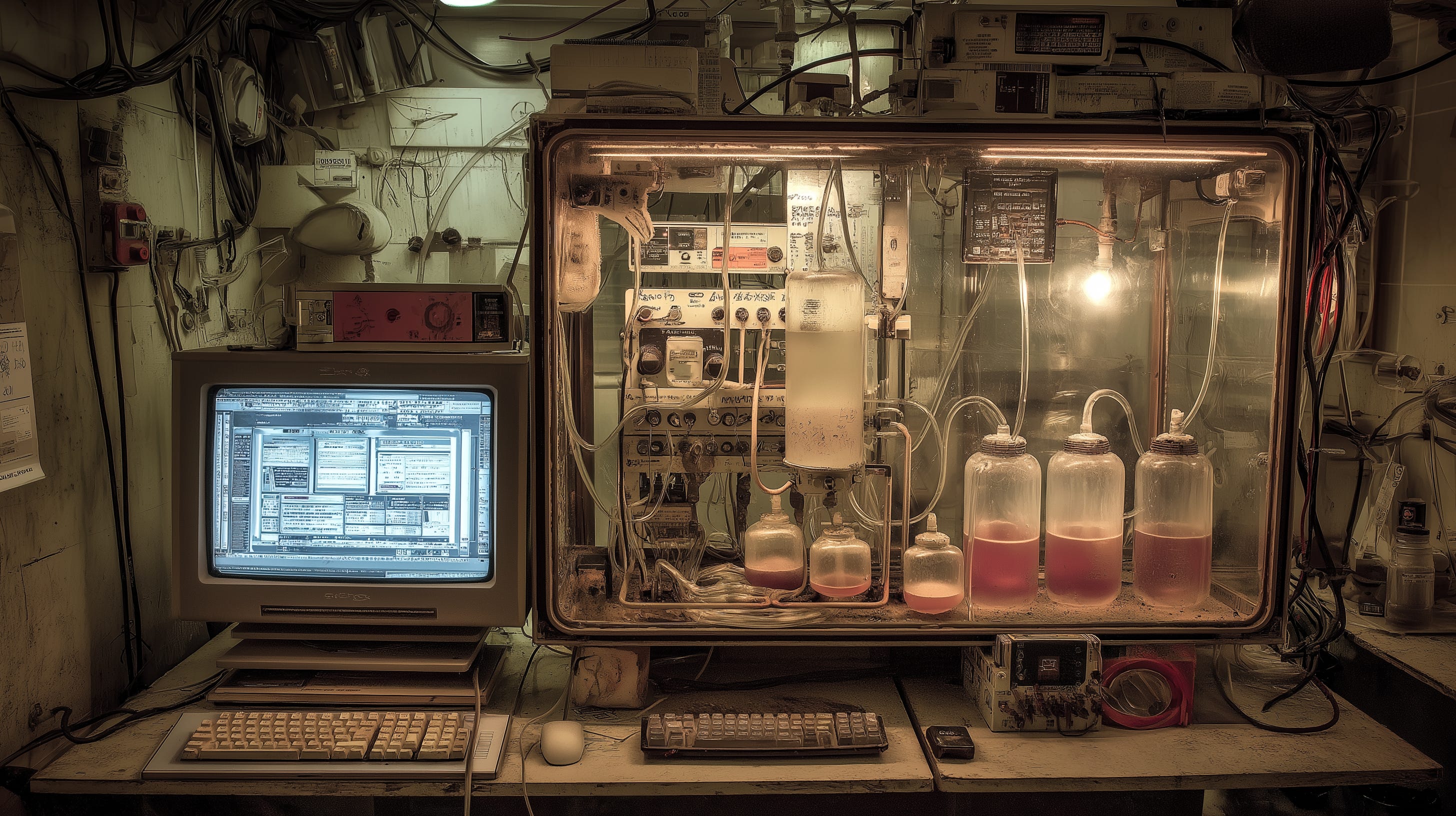
I just finished Bill Gates’s recently released memoir, Source Code. It was a fun read, even if the beginning was a bit slow. I grew up during Microsoft’s heyday, in the nineties, when Bill Gates was the wealthiest person in the world. I was a kid who was obsessed with software, so I sort of assumed I knew the Microsoft story.
I did know the outlines: that Microsoft was founded in New Mexico in the seventies, that Gates had dropped out of Harvard to work on it, that their first product was a version of the BASIC programming language and that Microsoft’s success really took off with the release of MS-DOS (I myself was a power user in the eighties). But the book filled in a lot of the gaps.
For instance, I wasn’t aware of the fact that Gates founded Microsoft when he did because of two insights, one more obvious and one less obvious. The more obvious one was the impending explosion of home computing. Even this wasn’t terribly obvious at the time. Gates learned programming on massive, million dollar mainframe systems that filled entire rooms and needed to be programmed with punch cards. Later, the release of all-in-one processors such as the Intel 8080 and, later, prototype personal computers like the Altair 8800 (for which Microsoft developed its first application) began to make this possible, and the devices quickly took off among hobbyists with time and money on their hands.
The less obvious insight was that software was where the real value would be created and captured. At the time, computer manufacturers were completely focused on hardware. The first home computers, including the Altair, shipped with no software. To the extent that it existed at the time, software was considered to be so cheap as to be of no value, i.e., commoditized. Hardware was the thing that people got excited about.
Lots of factors played into Microsoft’s success. Gates was in the right place at the right time: legitimately passionate about a niche technology that was poised to take over the world. But he was also a visionary and saw what other people at the time couldn’t see.
I always find stories like these incredibly inspiring—which is why one of my favorite genres is the founder biography. Reading this memoir got me thinking, what would it be like to found a company like Microsoft today? This is both an interesting thought experiment in its own right, as well as a possibly productive exercise for an aspiring entrepreneur.
Let’s break it down into three categories.
Thing #1: Enabler 💪
Very few entrepreneurs become billionaires by following trends or building on old technology. Nearly all massive success stories have one thing in common: taking advantage of a new technology. Nearly all of those technologies that are large enough to cause a paradigm shift have led to billion dollar successes: rail, steel, petroleum, the automobile, electrification, telecom, personal computing, the Internet, and the mobile phone, to name but a few recent examples.
The obvious example today is AI, as we’re in the midst of the AI revolution and transformation. However, AI today is much further along, and much more advanced, than personal computing was at the time when Gates and Allen wrote their first version of BASIC. In other words, the Microsofts of the AI era have probably already been founded (although it’s hard to say, since I also have a feeling that we may be in for another AI winter, which means there might still be future opportunities here).
A better example is bioconvergence: the merging of biology and engineering to produce “living” engineered biological systems for all sorts of applications. This is a technology that’s still niche today, like personal computing was in the early seventies. Most people have never heard of it, and it has real potential to change the world.
Bioconvergence could have a massive impact on several sectors. It could completely transform manufacturing: rather than making things, we could grow them. It could completely transform agriculture: microbiome engineering and biosensors could massively increase agricultural output, and we could potentially even grow meat, dairy, eggs, and other sources of protein in a lab. It could completely transform how we produce energy and chemicals through the invention of more efficient biofuels and bioplastics. And it could transform medicine, as well, leading to faster and cheaper drug discovery and development, bio-engineered organs and tissue engineering, and personalized medicine that’s tailored and individually optimized.
To be clear, I have no specific insights on this particular enabling technology. It remains niche today, and relatively underdeveloped, and there are plenty of risks. It might never amount to anything. But my gut feeling is that it’s in just about the same spot that personal computing was five decades ago at the time of Microsoft’s founding: on the verge of the possible, and two or three major breakthroughs away from massive success. For the purposes of this issue, it’s as good an enabling technology as any to explore.
Thing #2: Insight 🧠
What’s the software to the hardware of bioconvergence and bioengineering? This is where the fun really starts. What’s the massively important, high potential thing that everyone is missing completely or undervaluing today?
We’re really going out on a limb here. I don’t know much about bioconvergence, and I certainly don’t know with any degree of confidence that it’s the next big thing, but for the sake of argument let’s assume that it is.
Let’s zoom in on personalized medicine and microbiome. Right now, when people talk about personalized medicine, they’re talking about things like speeding up drug discovery, and tweaking existing medicines to be more effective for certain people, or doing a better job of selecting medicines based on more variables than we use today. And it’s still early days for microbiome research. We’re still just understanding the role that it plays in our overall health, and we’re not yet at the stage where we can engineer a specific microbiome to achieve certain goals.
What if this were to change? What if someone invented a microbiome “computer,” or equally, a medicine “computer” that could run medicine “programs”? What if we’re too focused on the “hardware” of these ideas—on relatively rigid, inflexible platforms that in and of themselves can’t do much, and are merely proofs of concept, but that could be made to do amazing things with some creativity?
It’s hard to say a lot more about this, because we’re moving now from the fringes of the possible into science fiction territory, but it’s a thought experiment and it’s still fun to reason about.
The low-level language of computing is bits and bytes. Processors take collections of bits and bytes, known as instructions, along with input data and process them one by one to produce outputs. A program is just a string of these instructions, which act upon memory, the display, and other forms of output—at their core, all programs work this way, even the most complex ones.
What’s the low-level language of, say, microbiome? It would be gene circuits, metabolic pathways, and signaling networks. Could there be an equivalent language, or instruction set, that could be expressed with a core set of these biological primitives? Whatever a “bio computer” might look like, I’m sure it wouldn’t look precisely like this, but it’s also possible that there’s an analogue with the way computing works.
So, the Microsoft of today would not only see the incredible potential of bioconvergence and underlying ideas such as engineering a microbiome, it would also see something else that even other biohackers don’t see: that the highest potential, most exciting thing to do isn’t to engineer a specific microbiome for a specific use case. Instead, it’s to design and build a more general-purpose microbiome “computer,” an architecture with a language, that could run many kinds of microbiome “programs.” (Okay, technically that would be the Intel of today, and the Microsoft would be the company that wrote the first of those programs, but you get the idea.)
I want to acknowledge that, in reality, biology is too messy to be spoken about in such deterministic terms, and bioengineering will never map cleanly to “bits and bytes.” Where digital computing is clean, deterministic and composable, biology is noisy, context-dependent, and analog. Lots of work has been done on synthetic biology and ideas like genetic logic circuits, but I don’t fully understand them.
Thing #3: Market 🛍️
The enabling technology, and Microsoft’s unique insights are interesting, but the other aspect of the Microsoft story that I find so fascinating is the market. In order to understand why, it’s helpful to have some context about the computer market in the early seventies.
When Microsoft was founded, PCs didn’t yet exist. Computers were mainframes which, as described above, took up an entire room and cost millions of dollars. They were extremely scarce, and most people could only get access to a computer through a timeshare arrangement from a major institution, a university or a big company. Because it was scarce, compute time was also very expensive: even most companies couldn’t afford it. In other words, the market for computers was small and dominated by a tiny number of very large transactions made by large companies and institutional purchasers.
So the companies that introduced the personal computer, and those that provided peripherals and software for the PC, really didn’t know what the market would look like. MITS, which introduced the Altair in 1974, expected to sell only a few hundred units. But the customers who bought PCs looked nothing like the existing customers who bought mainframe computers! They were home hobbyists, not large companies, and, at least initially, they were buying computers to play with, not to get real work done. So the early PC companies went out on a limb, took huge risks, and ended up defining an entirely new market segment, one which grew to be orders of magnitude larger than the entire previous market (a typical case of disruptive innovation). In the event, MITS sold thousands of units their first year, and struggled to keep up with increasing demand.
What might the market situation look like in our hypothetical 2026 bioconvergence Microsoft?
Let’s zoom in on manufacturing. This is one of the largest industries in the world, worth tens of trillions of dollars per year. While some manufacturing sectors do permit low- to mid-volume manufacturing, on-demand orders, etc., a lot of manufacturing looks like computing prior to the PC revolution: consisting primarily of big companies placing large orders for big batches. Think Gap ordering 10,000 pairs of pants or Amazon ordering 100,000 lightbulbs, for individual deal sizes in the hundreds of thousands or millions of dollars. Most manufacturing companies in sectors such as chemicals, materials, packaging, and textiles aren’t able to produce much smaller lot sizes at competitive prices.
When 3D printing emerged a decade or two ago, there was a brief moment when we thought that the technology might disrupt the entire manufacturing industry. If people could download models and custom print things at home, why would they need to order things from big suppliers who are downstream of big manufacturers? In retrospect, while 3D manufacturing did have a big impact on certain types of manufacturing, notably aerospace and medical devices, that vision never came to pass. 3D printing is an important, exciting technology, but even after decades it’s still extremely limited in terms of what it can achieve, and it remains niche and isolated to a few industries.
What if bioconvergence brought about the sort of disruption that we thought might happen due to 3D printing? What if it gets really good, really fast, and in a few years’ time we can “grow” durable objects rather than manufacturing or “printing” them? What if this can be done cost effectively in tiny lot sizes, and locally rather than in major manufacturing hubs? If this came to pass, it would upend the manufacturing industry—and possibly save consumers a lot of money, and raise the global standard of living.
There’d be a lot of risk for a company pursuing this sort of strategy. Like MITS and Microsoft, they’d be placing a bet that a large market would arise where there wasn’t one before. They’d be going out on a limb and defining their own market. Maybe, just maybe, there’s enough hobbyist biohackers out there today who’d be excited to experiment with a new technology, with new products, and to try disrupting the manufacturing industry from the ground up. It’s very risky, and it would probably fail, but there’s a small chance that the bet could pay off massively. There’d be no way to know without trying!
It’s genuinely fun to consider how the intersection of the right enabling technology, a key insight, and a new, grassroots market might change the world. It’s happened many times before, and it will happen many times again!
Brilliant framing around the hardware vs software insight. The microbiome computer analogy is fascinating becuase it implies standardization at the protocol level, which bioconvergence still lacks today. The real challange might not be technical but regulatory tho, since FDA/EMA approval paths are built for rigid interventions not programmble biology.