I Contain Multitudes
Three Things #190: October 12, 2025

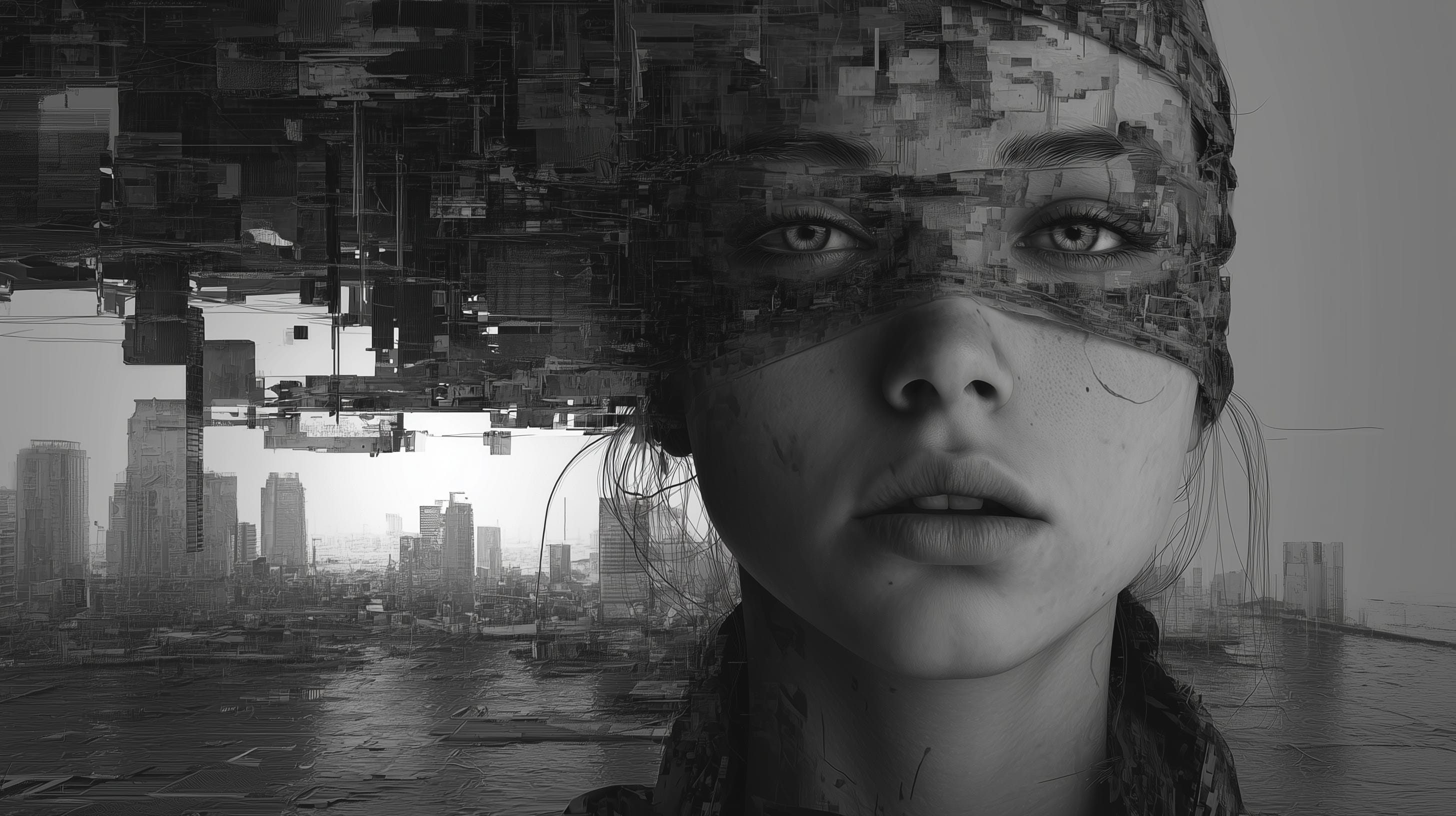
I became aware of this famous line from a famous poem, “Song of Myself,” by Walt Whitman, a long time ago, probably as far back as high school:
“Do I contradict myself?
Very well then I contradict myself,
(I am large, I contain multitudes.)”
This line is so famous because the sentiment is universal and powerful: we are all complex creatures, and we have complex thoughts, emotions, and identities that are often in internal conflict. Indeed, I’ve definitely borrowed the line to express this sentiment.
But I recently became aware of an entirely different interpretation when watching a delightful film, The Life of Chuck. The film, based on a short story of the same name by Stephen King, tells the life story of a man, Chuck, who’s dying of brain cancer. The story is told in a creative, refreshing way, and isn’t nearly as morbid as the ending might suggest.
There’s a powerful scene in the film, when Chuck was a child, where he lingers after class and has a one on one conversation with his English teacher. Chuck asks the teacher what the line “I contain multitudes” means. The teacher touches his temples with her two hands and says something to the effect of, here, in here, between my fingers, you will construct whole universes. You’ll populate this space with people and places and stories and planets and entire universes. (This theme recurs throughout the story, and, in fact, this line is extremely enlightening and knits the entire story together.)
I had never considered the line, or indeed the poem, in that manner, but it tied together several different strands of understanding in a sort of epiphany that I want to try to explain here.
Thing #1: Dhamma ☸️
Buddhism doesn’t delve too deeply into questions such as the origin of things, believing them to be orthogonal to its main task, i.e., liberation from suffering. But Buddhism does have a cosmology of sorts, and a rather complete one at that. And, as far as I understand it, in Buddhism, all reality that we experience and understand is reality that we construct ourselves. Put differently, there is no reality apart from our experience of it, a notion Buddhists call nondualism.
This is emphasized most strongly in context of the reality of suffering, and the escape from suffering—which, again, is the main thrust of Buddhism. Probably the most famous story is the parable of two arrows. In brief, the Buddha asks us to imagine being struck in the arm by an arrow: this would cause great pain and suffering. It may also cause us to panic, wondering whether we might bleed to death, whether the wound might become infected, etc. Buddha then points out that, while we can’t avoid the pain of the first arrow, the second, which is our reaction to the first, is entirely within our control.
The Buddhism cosmology is laid out through ideas such as the chain of dependent origination, by which all sensations and experiences come to pass. One of the goals of Buddhism is to break this chain by removing a link: specifically, the link between the occurrence and our reaction to it, positive or negative, between “feeling” and “craving.” In Buddhism, existence itself, and suffering, are downstream of experiencing and reacting. (Note that Buddhism is equally concerned with positive reaction, i.e., cravings, as it is with negative reactions, i.e., aversions, since the two are equally capable of preventing us from achieving enlightenment.)
What’s more, as mentioned above, Buddhism emphasizes the fact that everything we experience is self-constructed: there is no separate “real world” beyond perception. This is precisely the thing that stands in the way of enlightenment: when we are able to “break through” to this underlying reality, which cannot be described adequately in words, then in that moment we’ve achieved enlightenment.
Understood in the light of Buddhism, then, “I contain multitudes” is an extraordinarily powerful thought. It’s exactly true that everything we think we know—the people around us, concepts and ideas, language, numbers, other abstract concepts, the world itself, planets, universes, the very fabric of reality—in a sense, all of it exists simply between our temples, inside our busy minds. It’s hard to say precisely why, but I find this thought powerful and liberating, and I like to remind myself of this from time to time. As Shakespeare so aptly put it, “There is nothing either good or bad, but thinking makes it so.”
All of the universes I’ve constructed in my head—of happiness, of sadness, of pleasure, and of suffering—all of them are precisely that: my own, personal mental constructs, and not something durable and essential in any meaningful sense, to me, let alone to anyone else! This idea is reassuring.
Even the most irreversible of all things, death, even this is simply perception.
Thing #2: Death 🪦
I lost my father a few years ago, an experience I’ve alluded to here but never really wrote about in full. He was one of the smartest, most curious, most intellectually engaged people I’ve met, but the last few years were rough. Dementia eventually ravishes even the strongest of minds.
My father’s world was big—albeit not so big, I think, as mine. His was a world of the mind, quite literally: he was a psychologist, and he published broadly, on a variety of topics, exploring ideas such as hermeneutics (the study of interpretation and meaning), ethics, and moral judgement. He was chair of the Department of Psychology at an esteemed university for many years, and, as he put it, built the entire department, hiring many people and mentoring them in their careers. He traveled a lot, for his age, and gave guest lectures and seminars. Throughout my childhood he regaled his children with adventure stories from travel to far-flung places like Mexico, India, and Hong Kong. These places seemed unimaginably distant and exotic at the time, even if they seem much closer today than they ever seemed to him.
He changed languages, cultures, and geographies multiple times. He spent the latter two-thirds of his long life in Manhattan, and although he didn’t speak much about it, as far as I can tell he had an active social life there. I can only imagine what the city must’ve been like in the sexy sixties, the stylish seventies, and the busy eighties, before I was born.
As he grew older, his world began to shrink, which I think is normal as one ages and focuses on their priorities. The father I knew growing up had exactly two priorities, work and family, and he had basically zero time or energy for anything else.
Over time, his world shrank even further. He left his role as department chair to focus on his teaching and research. Eventually, he dropped his research to focus on his teaching. His course load shrank over the years until he eventually had to drop to a single course per semester, becoming professor emeritus. What little travel he still did fell away: his very last trip out of the city, as far as I can remember, was to see me graduate from grad school in 2014. He was already 91 years old.
As with so many older folks, the pandemic proved extraordinarily difficult for him. He was forced to stop teaching entirely and whatever remnants of a social life he had were also taken away from him. I chose to live with him again at this point, in what turned out to be one of the final years of his life. The dementia was just starting to bite then. He still mostly had his wits about him, but had increasing trouble with things like date and time. He needed more and more help doing basic tasks. At this point, his world, which had once been so large, shrank even further, to just his apartment, and just the people around him in the present moment.
Over the following couple of years, I watched his world shrink until there was almost nothing left. This was difficult for my family and I to witness, and I can’t imagine what the experience must’ve been like for him.
Thing #3: Birth 🐣
The opposite of death is, of course, birth.
There was one bright, shining star at the end of my father’s life—my son, his first grandchild, was born a few months before his passing, and this brought immense light and joy to his life. I never saw my father happier than in those final months of his life, as his life was drawing to a close, and as another life was just beginning.
The terrible juxtaposition, seeing my father reduced to an infant state, just as my baby son appeared, was absolutely fascinating. I saw very clearly how we leave the world in more or less the same state in which we enter it, and how life really does come full circle in the end. I watched my father’s multitudes collapse in around him, just as I began to watch my son’s multitudes expand around him.
This is one of the aspects of being a new parent that I’ve found the most joyful and captivating: witnessing your child’s world expanding as they grow and mature. When they’re newborn, their world is quite literally just their immediate surroundings. They can barely see, and they have no notion of time or object permanence: i.e., an object that’s no longer within sight simply ceases to exist.
But this state doesn’t persist. Their vision and hearing improve, and they develop object permanence, so their catalog of “things” present in the world grows and grows. They learn to crawl, then walk, then run, so their physical map of the world grows in proportion. They learn to understand language, and then to speak, and over time they gradually develop an understanding of abstract notions like ownership and possession, sequence, cause and effect, and time. As a fully capable adult it may be impossible to imagine a world without these concepts, but it shouldn’t be difficult to understand that the appearance of these concepts contribute to a massive, rapid development in the child’s cognitive capabilities.
Even as it continues to expand, for the first few months and years, a child’s entire world is the home. They can’t conceive of people or things beyond the home. This is the golden moment for the parent, when you are effectively a god to your child; when you are their everything, their whole world. That begins to change, too, once they start school and begin to develop relationships with other people outside the home.
This is about as far as I’ve gotten on the parental journey, and it’s difficult for me to imagine what things will be like in the future, and how my son’s world will grow even bigger than it already is, but I’ve witnessed his growth so far with enormous pride and joy. And the further along my son gets, the more it makes me understand that juxtaposition and contrast, between his world growing in more or less equal proportion to how my father’s world shrank at the end.
My father’s world began so large, from my perspective—infinitely large and imposing relative to my own—and became so small. My son’s world, by contrast, started so small, and has become so large. My world today is much bigger than either of theirs is, or was, but my world isn’t growing so rapidly these days. I suspect my son’s world will be even larger than mine, when his time comes.
According to Buddhism, all of this is more or less an illusion. Our reality, our world, the multitudes that we contain, have no real, essential substance to them. They’re all based on perception. I find this thought comforting as well. It somehow makes the desire to continue to expand my world feel less urgent.
It’s almost as if all of us, all three of us, are peering through different vantage points onto the same underlying, unchanging reality. Our vantage points shift over time, as if we begin by climbing a hill, have the broadest vantage point in our prime, then descend the other side of that hill, more or less to where we began—but not really much wiser about the essential nature of reality.
I think the lesson here is: grow your world, as large as necessary, but no larger. Understand that the size of your world doesn’t actually matter: this, too, shall be taken away from you. Appreciate the magic of that growth, but also understand that it will eventually cease, and then reverse. Celebrate this, too, for this is the journey of life. Live your entire life with a childlike curiosity, and never stop asking questions or exploring.